Alim · Author · Poet
Allama Rasheed Turabi
Allama
Biography
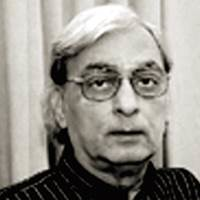
Allama Rasheed Turabi (9 July 1908 – 18 December 1973), born Raza Hussain, was a Pakistani Islamic scholar, religious leader, public speaker, poet and philosopher of the Twelver Shia sect. He is widely regarded as one of the greatest Shia orators of the 20th century, known for his profound knowledge, commanding oratory, and his pivotal role in spreading Shia Islam in Pakistan after Partition.
Born in Hyderabad, Deccan (in present-day India), he was the eldest son of Maulvi Sharaf Hussain Khan, a nobleman from Hyderabad. He received his early Islamic education from his father from the age of 5. He completed matriculation in Hyderabad and intermediate studies at Shia College, Lucknow. He earned a BA from Osmania University, Hyderabad State, and an MA in Philosophy from the University of Allahabad. He also studied Islamic sciences under leading Ayatollahs in Iran and Iraq, including Grand Ayatollah Hossein Borujerdi, Grand Ayatollah Muhsin al-Hakim, and Grand Ayatollah Abu al-Qasim al-Khoei. He was also a student of philosopher Khalifa Abdul Hakim in philosophy and English.
He became politically active early, serving as a lieutenant of Nawab Bahadur Yar Jang and acting as a religious orator under the last Nizam of Hyderabad, Mir Osman Ali Khan. He rose to become the chief of the Hyderabad State chapter of the All India Muslim League, and Quaid-e-Azam Muhammad Ali Jinnah personally nominated him as the information secretary of Hyderabad State's All India Muslim League.
He migrated to Pakistan in 1949 upon the personal request of Quaid-e-Azam Muhammad Ali Jinnah and settled in Karachi, where he began addressing Shia majalis at the Imambargahs in Kharadar, Khaliq Dina Hall, and Martin Road Pakistan Quarters. His first Shaam-e-Ghareban Majlis was broadcast on Radio Pakistan in 1951, becoming an annual tradition until his death. Over his 57-year career he delivered more than 5,000 religious lectures and speeches, becoming beloved among both Shia and Sunni Muslims for his eloquence, scholarship, and inclusive approach to Islamic unity (Ittehad-e-Bainul Muslimeen).
His last public Majlis was at Khaliq Dina Hall, where he suffered a heart attack in 1971. He continued addressing Majalis-i-Sham-i-Ghareban at Nishtar Park until 1973. He died on 18 December 1973 in Karachi and was buried at Hussainia Sajadia Imambargah in North Nazimabad, Karachi. His 13 children include Islamic scholar Aqeel Turabi, Urdu poet Naseer Turabi, and Taha Turabi.
Most popular lectures — Mohammadi Tape Bank (Archive)
Notable works
Tahniyat-e-Jubli (1936), Muqaddas Qanoon (1938), Tibb-e-Masumeen A.S. (1970), Majalis-e-Turabi (1989 posthumous)
Bibliography
4 works
- Tahniyat-e-Jubli (1936)
A celebratory collection of Turabi's poetry and prose, written on the occasion of a jubilee anniversary, showcasing his early literary and stylistic development.
- Muqaddas Qanoon (1938)
The Sacred Law — a reflective work on Islamic jurisprudence and moral principles, presenting Turabi's early religious philosophy and social critique.
- Tibb-e-Masumeen A.S. (1970)
Medicine of the Infallibles — a thematic collection of lectures on prophetic medicine, spiritual health, and ethical guidance from the lives of the Ahl al-Bayt.
- Majalis-e-Turabi (1989, posthumous)
A posthumously published compilation of Turabi's majalis covering Qur'anic themes, Imamate, and Islamic ethics. Widely circulated among Shia communities.
Videos

Mir Anees Marsia By Allama Rasheed Turabi (rare recording)

Allama Rasheed Turabi - Topic "RIZQ" (rare video)

Yaqeen - Allama Rasheed Turabi (rare PTV majlis, early 1970s)

Allama Rasheed Turabi - An Unmatched Scholar And Orator

Sajda - Allama Rasheed Turabi (rare PTV majlis, early 1970s)

Marsiya Mir Anees Recited By Allama Rasheed Turabi

Allama Rashid Turabi | Biography and Relationship with Quaid-e-Azam (Urdu Documentary)
Fields & styles
Family tree
Parents
Maulvi Sharaf Hussain Khan

Allama Rasheed Turabi
You are here
Children

Aleya Turabi
Batool Turabi
Tahira Turabi
Linked profiles are clickable · Other members shown from available records
Please read Surah al-Fatiha for Allama Rasheed Turabi.
بِسْمِ اللَّهِ الرَّحْمٰنِ الرَّحِيمِ
Bismillahi 'r-rahmani 'r-rahim.
In the Name of Allah, the All-beneficent, the All-merciful.
الْحَمْدُ لِلَّهِ رَبِّ الْعَالَمِينَ
Al-hamdu lillahi rabbi'l-'alamin.
All praise is due to Allah, Lord of all the worlds,
الرَّحْمٰنِ الرَّحِيمِ
Ar-rahmani'r-rahim.
The All-beneficent, the All-merciful,
مَالِكِ يَوْمِ الدِّينِ
Maliki yawmi'd-din.
Master of the Day of Judgment.
إِيَّاكَ نَعْبُدُ وَإِيَّاكَ نَسْتَعِينُ
Iyyaka na'budu wa iyyaka nasta'in.
You alone do we worship, and to You alone do we turn for help.
اهْدِنَا الصِّرَاطَ الْمُسْتَقِيمَ
Ihdina 's-sirata'l-mustaqim.
Guide us on the straight path,
صِرَاطَ الَّذِينَ أَنْعَمْتَ عَلَيْهِمْ غَيْرِ الْمَغْضُوبِ عَلَيْهِمْ وَلَا الضَّالِّينَ
Sirata'lladhina an'amta 'alayhim ghayri'l-maghdubi 'alayhim wa la'd-dallin.
The path of those You have blessed, not of those who have incurred wrath, nor of those who have gone astray.
This profile was compiled from publicly available sources including Wikipedia. All biographical information is attributed to its original sources.
Wikipedia source